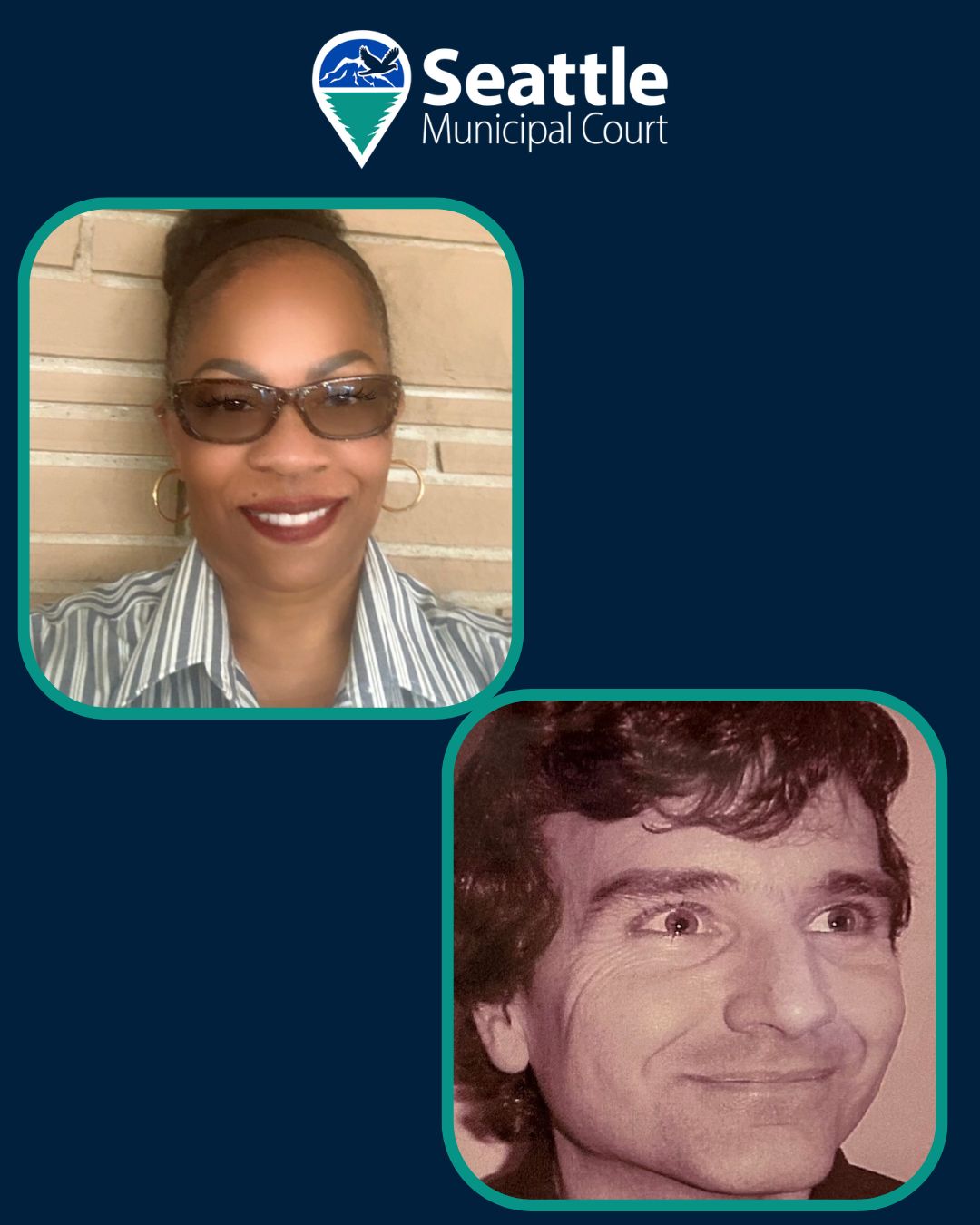
This post is part of “From the Archives,” a 12-part series exploring how the Seattle Municipal Court’s work, people, and spaces have evolved over time. While courtrooms are the most visible symbol of the institution, much of what keeps the court operational happens far beyond public view. Two longtime employees, including Lead (IT) Developer John Mann and Court Clerk Supervisor Kathy Tucker, offer a look into that quieter, essential side of the court’s history.
Different Entrances into the Same Institution
John arrived at the court in 2008, already nearly two decades into a career in City of Seattle technology roles. What drew him wasn’t a specific project, but an opportunity to apply his problemsolving skills to public service. His early work at the court involved partnerships with staff across divisions—especially bailiffs—designing tools that made daytoday tasks simpler and faster. “I like working with people and finding solutions to make their jobs easier,” he said, describing those years as some of the most gratifying of his career.
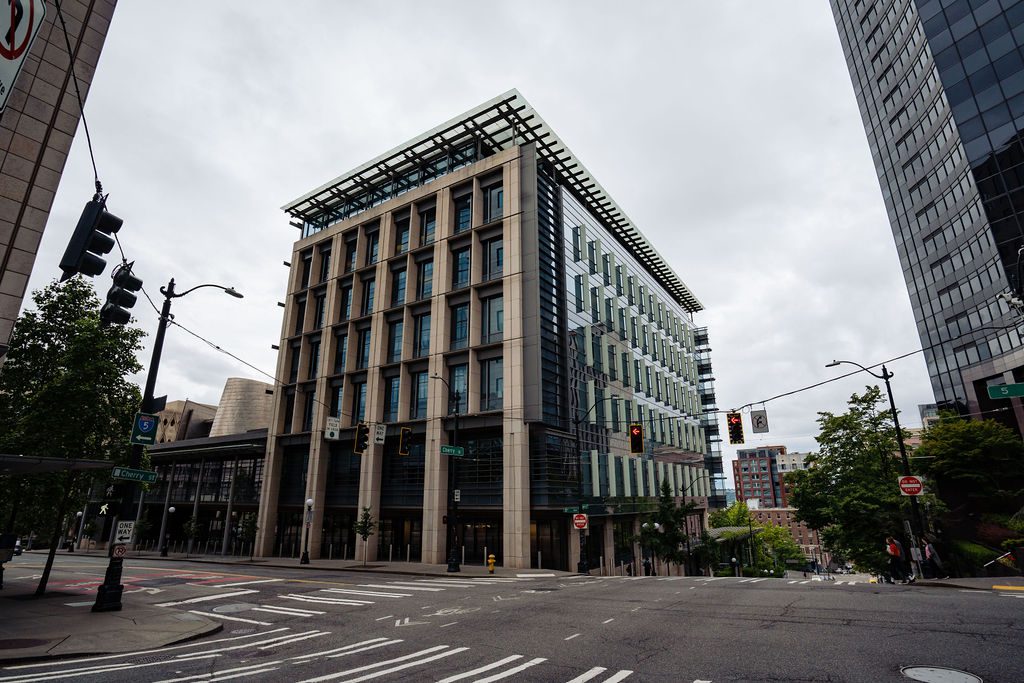
Kathy began much earlier, in 1998, back when the court still operated from the old Public Safety Building at Third and Cherry. She first worked as a cashier before a judge hired her to serve as a bailiff—a role she has held ever since. She was drawn to public service by the chance to make a meaningful difference for people navigating difficult situations. “I value being part of an organization that serves the public directly,” she reflected. For her, that sense of purpose never changed, even as everything around her did.
A Changing Court=Changing Work
Like the court itself, their roles evolved as operations modernized and technology reshaped longstanding workflows.
For John, that shift became especially visible with the implementation of C-Track, the court’s case management system. Originally, integrations with vendors and partners were built quickly to meet tight deadlines. Today, his work is focused on improving those connections to run more efficiently and accurately. His favorite example is an integration that reduced a 24hour collections process to under two minutes. Technology, he said, changes constantly. “You can’t stay on top of everything, but you can’t fall too far behind either.”
Kathy watched a different transformation unfold. When she started, communication traveled through landlines, pagers, printed memos, and postal mail—often with a daily race to get paperwork to the mailroom by 3 PM. Today, operations move at digital speed. But while the tools changed, the nature of her work—ensuring cases progress smoothly and people receive support—remains deeply rooted in human connection. Her days begin with scheduling, responding to urgent issues, and coordinating with judges, attorneys, staff, and marshals. “Every day is different,” she said. “You never know what you’re going to get.”
The Importance of Collaboration
Both John and Kathy describe teamwork as essential to the court’s success.
John partners closely with two other developers as they build foundational software that streamlines future integrations. Lunchtime frisbee breaks with a teammate provide levity in a role where, as he says, “there is always something,” especially in the early, unpredictable days of C-Track.
For Kathy, teamwork came into sharp focus during court-wide C-Track training. Watching colleagues across divisions learn, adjust, and support one another affirmed how interdependent the court truly is. “This court cannot function smoothly without each team or department,” she noted. Open communication, mutual respect, and shared accountability guide their work.
What the Public Doesn’t See
Both John and Kathy wish the public understood just how much happens before anyone steps into a courtroom. Behind the scenes, processes rely on precision; even small errors can delay hearings or disrupt outcomes. And beneath the formality of judicial proceedings is an institution deeply committed to fairness. “People sometimes feel they’re up against the system,” John said, “but the court is largely interested in helping people.”
Why They Stayed
After decades of change, both remain committed for similar reasons: the work is meaningful, the challenges are engaging, and the people make it worthwhile. John enjoys solving complex problems and creating tools that make others’ work easier. Kathy finds purpose in supporting the court’s mission and values, and in the relationships built over 28 years.
Closing Reflection
Looking back over their combined decades of service, a common thread emerges: the court’s evolution is shaped not only by new buildings or new systems, but by the people who learn, adapt, and steady the work through every transition. John and Kathy’s stories remind us that the heart of the court isn’t found only in its courtrooms—it’s carried in the quiet problemsolving, the patient coordination, the teamwork, and the belief that public service can improve someone’s day at a moment when they might need it most. As the court continues to change, their experiences offer a reminder of what endures: commitment, collaboration, and the daily effort to serve the community with care.